

Reading Time: 10 Min.
Date Published: March 5, 2026 10:03 am
Author: Darci Johnson
Article Contents
There are certain conversations in dating that feel tender before they ever happen.
Money is one of them.
Not because it’s inappropriate. And not because it isn’t romantic. But because money carries history. It holds the story of how we were raised, what we’ve built, what we’ve lost, what we’re protecting, and what we hope to create next.
At The Matchmaking Company, we’ve seen that financial compatibility in relationships isn’t really about numbers. It’s about peace. It’s about whether two people feel steady when they imagine building a life side by side.
Love should feel calm, not complicated. And talking about finances while dating, when done with thoughtfulness, can actually deepen trust instead of disrupt it.
If you’ve been unsure how to talk about money on dates without making it awkward, this is your gentle starting place.
Summary
Money talks in dating are emotionally charged because they reflect values, security, and the life two people hope to build, and true compatibility is more about alignment and peace than numbers. Let money conversations deepen as the relationship grows, using five gentle approaches: lead with values, focus on lifestyle expectations, share without oversharing, ask with curiosity, and treat the dialogue as intimacy. Address income differences honestly, watch for red flags like secrecy or pressure, and aim for mutual transparency over time. The heart of it: kind, intentional conversations about money build trust and make love feel calm rather than complicated.
Why Money Is So Emotional
Money is practical. But it’s also deeply personal.
It reflects:
- How we define security
- What we value
- How we handle responsibility
- What kind of future we picture
Two people can care for each other sincerely and still feel tension if their financial values in relationships are very different. One may feel safest saving diligently. Another may believe life is meant to be experienced now. One may be supporting children or aging parents. Another may be focused on early retirement and simplicity.
None of these approaches are wrong.
But they matter.
Financial compatibility is part of lifestyle alignment. And lifestyle alignment is what allows love to feel restful instead of strained.
When Should Money Come Up?
There is no perfect timeline.
Early dating is about warmth, curiosity, and shared laughter. It’s about discovering how you feel around someone.
But when you begin imagining a future, even quietly, it’s natural for larger conversations to surface. Where will we live? What will life look like? How do we want to spend our time?
Money fits inside those questions.
Going too deep too soon can feel transactional. Avoiding it entirely can lead to assumptions.
The middle ground is simple: let the conversation grow as the relationship grows.

How to Talk About Money on Dates
You don’t need a spreadsheet. You need sincerity.
Here are five steady, respectful ways to approach money conversations in dating.
Begin With Values, Not Income
Instead of asking, “How much do you make?” start with something softer:
- “What makes you feel financially secure?”
- “Did your family talk openly about money growing up?”
- “Are you more of a saver or someone who enjoys spending on experiences?”
These questions reveal their mindset, and mindset tells you far more than a number ever could.
You might offer something about yourself first: “I’ve learned I sleep better knowing I have savings set aside. It gives me peace.”
Or: “Travel and shared experiences are important to me, so I plan for them.”
This isn’t about proving anything. It’s about letting someone see how you move through the world.
Talk About Lifestyle, Not Status
Lifestyle alignment matters more than income level.
Two people can earn very different amounts and still build a meaningful, balanced partnership. What matters is whether your expectations feel compatible.
Try questions like:
- “What does a really fulfilling life look like to you in five years?”
- “Do you imagine slowing down professionally at some point?”
- “How important is retirement planning to you?”
These conversations gently touch on career ambition, long-term stability, and financial priorities without turning the moment into an interview.
You’re not comparing. You’re exploring.
Share Your Story Without Oversharing
For many adults dating after 40, finances are layered.
There may have been a divorce. A business built from the ground up. A rebuilding season. Children to support. Wealth to protect. Lessons learned the hard way.
You don’t have to explain everything at once.
You might say: “My divorce taught me a lot about being intentional with money.”
Or: “I’ve worked hard to build stability, and that’s something I value.”
Or: “I’m in a rebuilding chapter, but I feel proud of where I am.”
Honest. Grounded. Respectful of your own privacy.
The right person won’t need every detail immediately. They’ll simply appreciate your openness.
Ask With Curiosity, Not Concern
There’s a difference between wanting clarity and sounding cautious.
If something feels important to you, frame it gently:
Instead of: “Do you have a lot of debt?”
Try: “How do you think about borrowing versus saving?”
These small shifts change the tone completely.
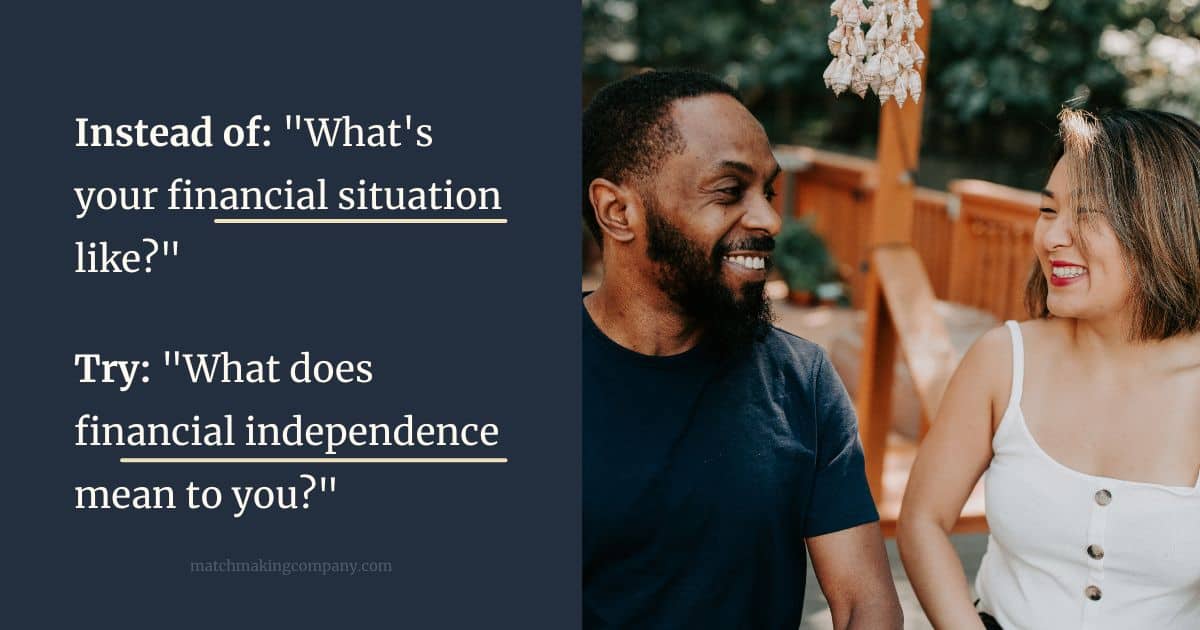
Instead of: “What’s your financial situation like?”
Try: “What does financial independence mean to you?”
Money conversations in dating should feel like two adults trying to understand one another, not trying to evaluate each other’s worth.
See It As Intimacy, Not Administration
When two people can talk calmly about discussing lifestyle expectations in relationships, whether that’s supporting family, planning retirement, owning a home, or traveling the world, something steady forms between them: trust.
Money and emotional intimacy are more connected than we realize. When someone speaks honestly about how they handle responsibility, generosity, or planning, they’re showing you how they show up in partnership.
And that is meaningful.
What If I Don’t Want to Talk About Money?
If you’re honest with yourself and think, I really don’t want to talk about money on dates at all, you’re not alone.
For many people, money conversations carry old memories, whether it be a difficult divorce, financial imbalance in a previous relationship, growing up with scarcity, or even being judged for success. Avoiding the topic can feel safer than reopening something tender.
But here’s the gentle truth: not wanting to talk about money often isn’t about money.
It’s about vulnerability.
Talking about finances means revealing how you live. What you protect. What you fear. What you hope for. It asks you to trust someone with the practical side of your life, and that can feel exposing.
You don’t have to rush. You don’t have to disclose every detail. But if you’re hoping for lasting partnership, financial transparency in relationships eventually becomes part of building emotional safety.
If the resistance feels strong, ask yourself:
- Am I protecting myself from being judged?
- Am I afraid of being valued only for what I have, or dismissed for what I don’t?
- Am I carrying unresolved hurt from the past?
Those reflections aren’t meant to pressure you. They’re meant to empower you.
Because love that feels peaceful is built on honesty, even in the areas that once felt uncomfortable.
You deserve a relationship where money conversations feel respectful, steady, and safe. And that begins with allowing them, slowly and thoughtfully, into the light.
If You Feel Financially Unequal
Income differences can quietly stir insecurity.
If you earn more, you may worry about being valued for the wrong reasons.
If you earn less, you may fear judgment.
Instead of letting assumptions grow, try something simple: “Income differences have made me self-conscious in the past. I really care more about shared values than numbers.”
That kind of honesty builds connection instead of distance.
Lifestyle alignment matters more than income level. Shared responsibility. Shared vision. Shared respect. Those are the foundations of enduring love.
Gentle Red Flags
While money itself is neutral, patterns around money can reveal character.
Pay attention if someone:
- Refuses to discuss finances at all as the relationship deepens
- Pressures you for specific financial information very early
- Speaks irresponsibly about money without accountability
- Makes you feel small about your financial position
Financial transparency in relationships unfolds over time. It should feel mutual. Natural. Safe.
The Heart of It All
The goal is not to find someone financially identical to you.
It’s to find someone whose rhythm feels compatible. Someone who sees money as a tool for building a meaningful life, not a source of control, secrecy, or imbalance.
At The Matchmaking Company, we believe love and money can coexist peacefully when conversations are intentional and kind. Financial compatibility isn’t about wealth. It’s about whether two people can build a future without quiet resentment or unspoken fear.
Real love is worth finding again.
And when you approach money conversations with steadiness and grace, what you’re really building isn’t a financial plan.
You’re building trust.
Love that feels like home is created through honesty, even in the practical things.
Especially in the practical things.
Because lasting connection isn’t built on numbers.
It’s built on understanding.
Q&A: Your Questions About Money Conversations on Dates
Q: What does “financial compatibility” really mean?
Short answer: It’s less about matching salaries and more about feeling steady together. Financial compatibility is about shared values, expectations, and a lifestyle rhythm that makes love feel calm instead of strained. When two people align on what security looks like, how they handle responsibility, and the kind of future they want to build, money becomes a tool for peace rather than tension.
Q: When should money come up in dating?
Short answer: There’s no perfect timeline; let the conversation grow as the relationship grows. Early on, focus on warmth and connection. As you start imagining a future together (even quietly), money naturally fits inside questions like where you’ll live or how you want to spend time. Going too deep too soon can feel transactional; avoiding it entirely invites assumptions. Aim for thoughtful, gradual dialogue.
Q: How can I talk about money without making it awkward or intrusive?
Short answer: Lead with values and curiosity, not numbers. Start with soft, mindset-focused questions like “What makes you feel financially secure?” or “Are you more of a saver or an experiences person?” Share a bit about yourself first: “I sleep better with some savings set aside” or “I prioritize travel and plan for it.” Frame clarifying questions gently: ask “How do you think about borrowing versus saving?” instead of “Do you have a lot of debt?” Tone and timing matter; you’re exploring, not interviewing.
Q: What if our incomes are very different?
Short answer: Focus on lifestyle alignment and shared priorities rather than status. Income gaps can stir insecurity. Name that honestly: “Income differences have made me self-conscious in the past. I care more about shared values than numbers.” What matters is compatible expectations, shared responsibility, and mutual respect. Two people with different earnings can still build a calm, balanced partnership when their vision for life aligns.
Q: What are gentle red flags to watch for in money conversations?
Short answer: Notice patterns, not one-off moments. Be cautious if someone refuses to discuss finances as things deepen, pressures you for detailed information too early, speaks irresponsibly about money without accountability, or makes you feel small about your situation. Healthy transparency unfolds over time and should feel mutual, natural, and safe.